
New partnership brings proton therapy to local patients

Many clinicians believe that once a patient has received radiation treatment for cancer, they can’t get more. While this may be true for traditional photon therapy, proton therapy gives patients another option.
Proton therapy enables radiation oncologists to precisely target radiation on many solid tumors, including tumors near critical structures and in sites that were previously treated with radiation.
WellSpan Health is now bringing this vital option to local patients through a partnership with Maryland Proton Treatment Center (MPTC), an NCI-designated center linked to the University of Maryland. Treatment occurs at the center in Baltimore, but each patient’s care is led from start to finish by Navesh Sharma, MD, medical director of radiation oncology at WellSpan Health and faculty member at the university.
“With proton therapy, WellSpan Health offers a complete range of cancer treatments. Local patients can get exactly the treatment they need from the team they know and trust,” Dr. Sharma says.
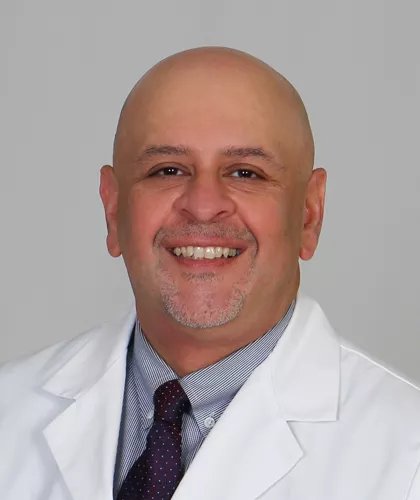
Navesh Sharma, MD
Continuous care from a team that knows each patient
One thing to understand about the partnership: WellSpan Health doesn’t refer patients to the treatment center.
“I remain their doctor,” says Dr. Sharma. “I evaluate the patient and plan the dosing. I see the patient every week during therapy. And if anything comes up, the center calls me first.”
That continuity of care spares patients the hassle of bouncing between different clinicians and prevents any insights from getting lost in translation.
While Dr. Sharma leads care for each patient, he also consults with expert physicians at MPTC to make each plan as safe and effective as possible. These experts include world-class medical physicists and site-specific radiation oncologists who specialize in proton therapy for brain tumors, GI tumors and other areas of the body.
“Proton therapy is like surgery in many ways. We plan the best way to eradicate a patient’s tumor while protecting important tissue nearby,” explains Dr. Sharma.
A high-tech, high-touch treatment center
WellSpan Health patients who go to MPTC have access to the latest technology and a suite of patient services to ease the burden of traveling out of town.
Clinical capabilities include:
- Pencil-beam scanning — the most advanced and targeted form of proton therapy — in every room.
- Hyperthermia treatment, which many patients receive directly after a proton therapy session to sensitize cells to the radiation and improve survival rates. MPTC is the only center in the world to offer both proton therapy and hyperthermia in the same facility.
Treatment itself often includes daily proton doses for five or more weeks. An MPTC concierge provides out-of-town patients with sightseeing ideas and help navigating the city. A free shuttle takes patients between the treatment center, the university for any appointments they may have with Dr. Sharma, and the Hope Lodge — a free lodging option provided by the American Cancer Society.
Dr. Sharma also notes that MPTC staff make an effort to schedule patients quickly.
“I evaluated one patient for treatment on a Tuesday, and that Friday we were in Baltimore prepping for treatment,” Dr. Sharma says.
Example case: Prostate cancer with no other options
In one recent case, Dr. Sharma cared for a patient with prostate cancer who had already received traditional radiation therapy and surgery for an earlier bout with rectal cancer. The patient’s prior treatments and complex anatomy, along with fibrosis in the pelvis, left few options.
“Without proton therapy, this patient would be looking at palliative chemotherapy,” says Dr. Sharma.
Instead, the patient received six weeks of proton therapy — with no signs of cancer or side effects following treatment.
“We’ve been with this patient since the beginning, so we knew how to navigate the complexities,” Dr. Sharma says. “We’ll be there for follow-up and to help the patient get past what we hope is the last hurdle in their cancer journey.”
The right path for each patient
While proton therapy is an ideal option in some cases, not every patient needs it. The physics of firing protons through layers of bone and different types of tissue is extremely complex, and the size and location of some tumors can make the application too difficult or unpredictable.
“Every chart I see, I’m asking whether they stand to benefit from proton therapy or not,” Dr. Sharma says. “If not, we have the alternatives they need right here.”
Call 717-741-8180 to refer a patient or learn more.