
Central Susquehanna Valley patients benefit from advanced spine robotics

Robotic systems enable surgeons to perform complex spine surgeries with greater safety, accuracy and confidence. WellSpan Evangelical Community Hospital in Lewisburg is the first to bring this type of robotic capability to patients in this region.
Together, orthopedic surgeons Matthew Eager, MD, and Peter Zhou, MD, have used robotics for more than 100 cases since their first in August 2025. They’ve treated all regions of the spine and helped patients as old as 82.
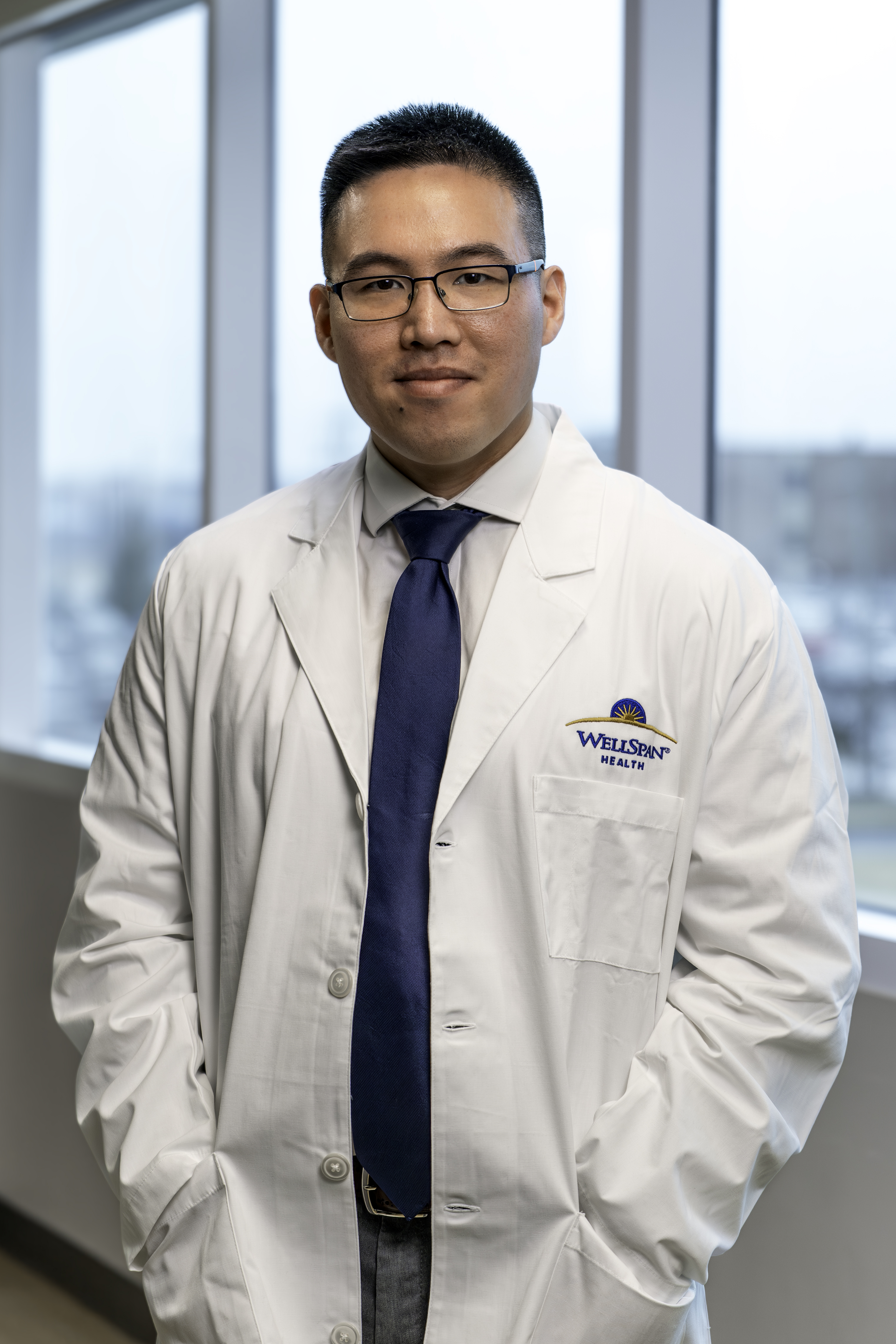
Peter Zhou, MD
“Adding robotics to our team in Lewisburg means patients with complex needs can get the care they need without leaving the community,” says Dr. Eager.
Pinpoint accuracy — with a surgeon’s touch
The term “robotics” encompasses a variety of different setups. Some systems have a robotic arm that performs maneuvers guided by the surgeon; some provide advanced imaging that the surgeon uses to plan and perform every move manually.
The system at WellSpan Evangelical falls in the middle. It includes:
- 3D, CT-level navigation that assists surgeons with planning and guidance.
- A robotic arm with an end effector that enables surgeons to position instruments at the perfect trajectory while still having control over making cuts and inserting screws.
“It’s the best of both worlds: The robot ensures accuracy, and I get the tactile feedback I need when I’m placing hardware or cleaning out a disc,” says Dr. Eager.
WellSpan Evangelical has the only system like this in the region. The robotics systems at local tertiary centers provide navigation only.
“It’s wonderful to offer this level of care to people in the area. We see many cases that would have required a referral out of town in the past,” says Dr. Zhou.
All fusion patients may benefit, especially those with high BMI or prior surgeries
Any person who needs instrumented fusion can be a candidate for robotic-assisted surgery. The team finds it especially useful for patients with:
- High BMI: Retracting sensitive tissue to access the spine can be quite complex in these cases. The superior imaging of the robotics system enables surgeons to plan safer, less invasive approaches than they could otherwise.
- Prior surgeries: Robotics also gives surgeons a clearer picture of scar tissue, existing hardware and missing anatomy. Without it, surgeons don’t know exactly what they’ll see until the procedure is underway, and they sometimes must change their plans — adding time and stress to the process.
Recent patients show success across a range of conditions
Reducing complexity for a patient with previous surgery
A patient in his 60s experienced degeneration in the lumbar region directly above the site of a previous surgery. Dr. Zhou added a spacer and multiple screws. By using robotics to plan his route, he reduced the amount of time and dissection typically required for a case like this.
“I didn’t have to dissect as much to find the correct trajectory through the scar tissue,” he says. “It's so much easier with the robot. More forethought, more precision. Fewer surprises.”
Restoring hand function through cervical decompression
A woman experienced weakness and dysfunction in her hands that made it difficult to eat, write and perform other activities. Imaging revealed severe arthritis throughout the cervical spine.
Dr. Eager performed a multi-level decompression and added several spacers and screws, requiring both anterior and posterior exposure.
“Posterior cervical surgeries are extremely complex,” he says. “Before we had robotics, I might have referred this patient to a different center.”
Instead, she was able to receive treatment and follow-up close to home. Today, less than three months after her procedure, she is thrilled with her improvements in hand function.
Improving pain and mobility for an octogenarian
A woman, age 82, with lumbar arthritis came to Dr. Eager expecting to receive injections to manage her pain. Her MRI showed severe stenosis and instability, so he recommended a three-level surgery involving eight screws and a spacer.
“I went to a school concert the other night, and she came into the auditorium carrying her cane and wasn’t even using it,” says Dr. Eager. “The results for our patients are unmistakable. You see them walking and smiling, and you know you made a difference.”